¶ University of Freiburg (Germany) XR Future Forests Lab
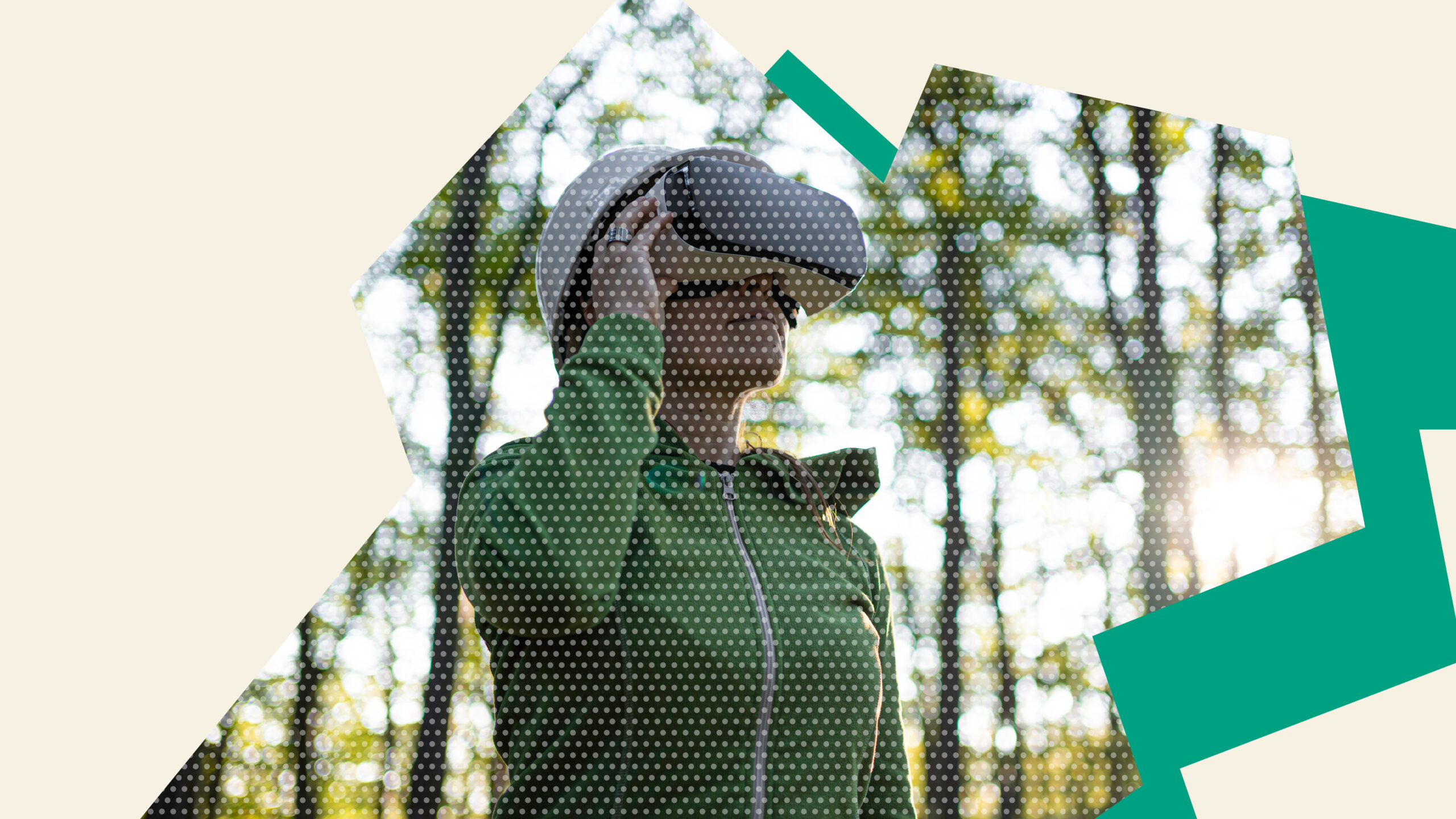
Description: The XR Future Forests Lab develops virtual (VR), augmented (AR) and mixed (MR) reality applications, initially for forest and environmental sciences in particular, including research into advanced data acquisition and analysis and the creation of digital twins of real forests. These digital twins enable the detailed modelling and visualization of forest growth, management processes and environmental changes at different research sites. The lab combines the expertise of the Chair of Forest Growth and Dendroecology and the Chair of Sensor-based Geoinformatics to improve research opportunities and generate synergy effects.
By integrating extensive forest data sets with innovative XR technologies, the XR-Lab will enable simulations of natural changes and human interventions and thus make a significant contribution to both research and education in forestry and environmental sciences in the future.
The XR Future Forests Lab is an immersive extended reality (XR) research and education environment that uses virtual reality (VR), augmented reality (AR), and mixed reality (MR) technologies to simulate forest ecosystems, silvicultural scenarios, and forestry operations, enabling researchers, students, practitioners, and policymakers to interact with photorealistic digital forest environments in ways that would be impractical, costly, or impossible to replicate in the field. Within the lab, participants can experience a plantation through successive stages of growth from establishment to clearfell, observe the effects of different thinning regimes on stand structure and biodiversity outcomes, walk through a simulated prescribed burn sequence, or operate a virtual harvester in complex terrain — all within a safe, controlled setting that compresses decades of forest development into minutes of experience. The educational value is particularly significant for forestry and environmental science students who may have limited field exposure opportunities, and for community engagement processes where immersive visualisation of proposed forest management activities can build shared understanding more effectively than two-dimensional maps or technical reports. Research applications include testing human-factors aspects of machine operator interfaces, evaluating spatial decision support tools in simulated environments before field deployment, and conducting behavioural studies on how foresters respond to simulated emergency scenarios such as fire spread or equipment failure. In Australia, institutions including the University of Melbourne's School of Ecosystem and Forest Sciences and various cooperative research partnerships have explored XR applications for forestry training and stakeholder engagement, recognising that Australia's unique forest types — wet sclerophyll eucalyptus forests, tropical rainforests, and dryland mallee woodlands — present distinct management challenges that benefit from high-fidelity digital twin representations to support research, training, and public communication about sustainable forest management.
Category: Autonomous Machinery & Robotics
FWPA RD&E: 8.5
¶ Details
| Company | Country | Type | Website | Available in Australia? | Year | Status | Remarks | TRL | Employees | Colour | Inventors | Patent Model. |
|---|---|---|---|---|---|---|---|---|---|---|---|---|
| Univresity of Freiburg | Germany | Company | Link | Green |