¶ requirements on forest growth models
| Authors | Gilson et al. |
| Country | University of British Columbia, Canada |
| Paper (PDF) | View paper |
| Category | Planning & Inventory › Remote sensing & mapping |
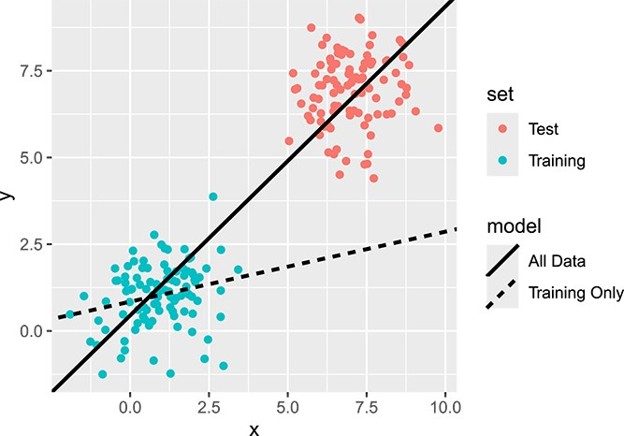
factors: robust to shift, growth in Modelvel conditions, disturbance, complex stand structures, genetic differences, mixed species, new species
0
¶ Overview
Forest growth models are mathematical and computational frameworks that simulate how trees and stands develop over time in response to site conditions, silvicultural treatments, climate, and competition, and they must meet a range of scientific and practical requirements to be useful in operational forest management. A well-specified forest growth model must be biologically realistic — capturing the physiological processes of photosynthesis, respiration, competition for light and water, and mortality — while also being empirically grounded through calibration and validation against measured inventory data from the region where it will be applied. Precision and accuracy requirements vary by application: strategic planning models for long-rotation native forests may tolerate wider confidence intervals than tactical harvest scheduling models in short-rotation plantations where small errors in yield prediction translate directly into financial losses. Models must also be flexible enough to simulate a range of silvicultural options — thinning regimes, pruning, fertilisation, species mixtures — and to extrapolate behaviour under future climate scenarios, which is increasingly critical for Australian forest managers facing shifting rainfall patterns and elevated fire risk. From a user perspective, operational requirements include transparent documentation of model assumptions and parameterisation, interfaces with common inventory databases and GIS platforms, and outputs calibrated to variables that managers actually use such as merchantable volume, basal area, and standing value. In Australia, growth models such as the Prognosis/Forest Vegetation Simulator adapted for local species, 3-PG (Physiological Principles in Predicting Growth) widely used in eucalypt and Pinus radiata plantation management, and CABALA (Carbon Balance and Allocation) have been extensively applied and refined. Requirements increasingly include integration with carbon accounting frameworks aligned with the Australian National Greenhouse Gas Inventory methodology, making model outputs directly relevant to emissions reporting and carbon market participation.
¶ Details
| Field | Value |
|---|---|
| Company | Gilson et al. |
| Country | University of British Columbia, Canada |
| Type | Paper |
| Year | 2025 |
| FWPA RD&E | 8.5 |