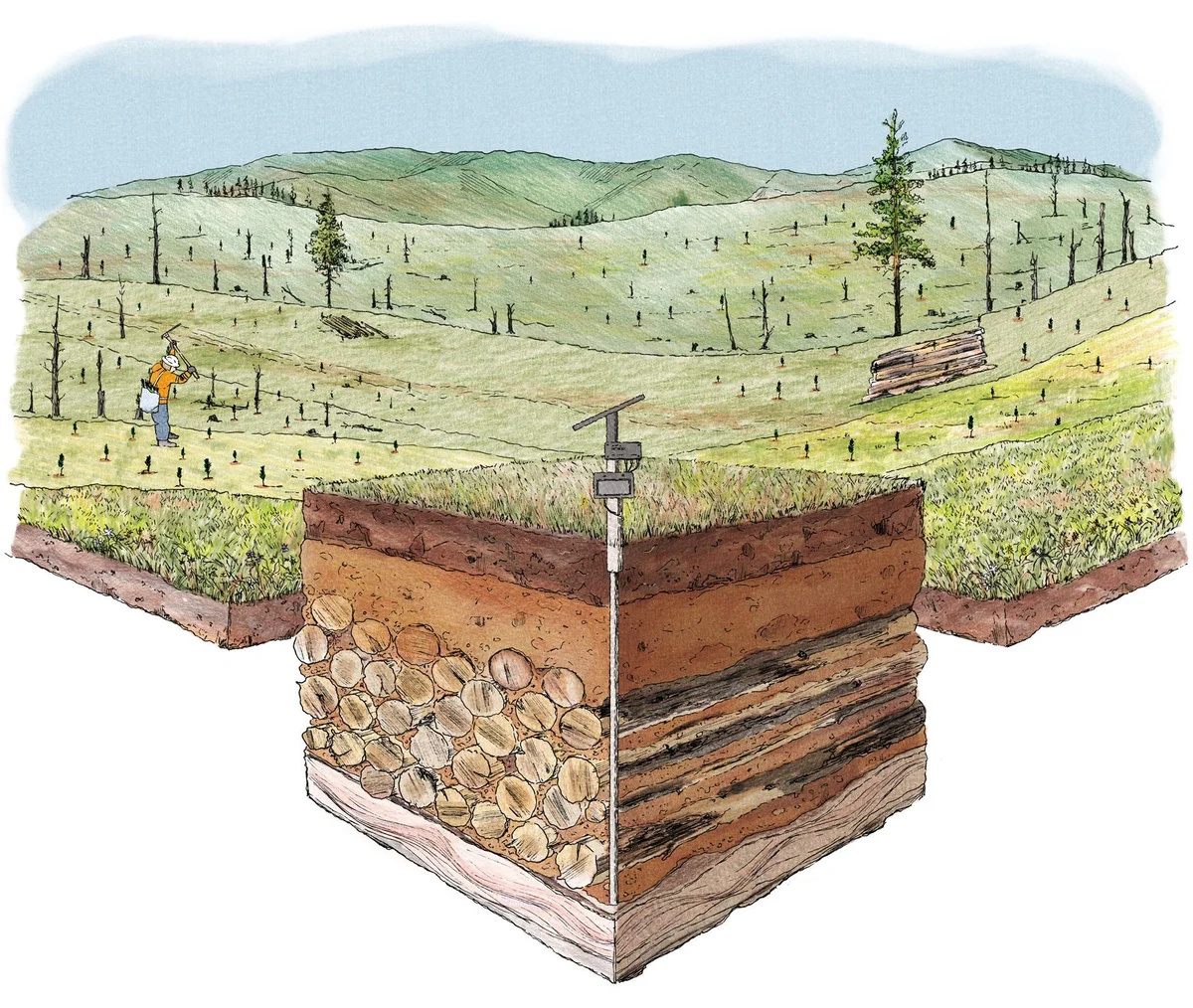
Reforestation drones are unmanned aerial vehicles (UAVs) adapted or purpose-built to deliver tree seeds or seedlings to land surfaces in order to accelerate the restoration of forest cover at scales and in terrain types that are difficult or prohibitively expensive to reforest using conventional ground-based planting methods. The most common operational approach involves drones carrying a payload of pre-germinated seed pods or encapsulated seeds — sometimes referred to as seed missiles or seed pods — and using precision GPS navigation to fly pre-programmed grid patterns over a target area, firing or dropping seeds into the soil at prescribed intervals to achieve a target stocking density. More advanced systems use multi-spectral or LiDAR sensors to assess soil conditions in real time and adjust seed placement to favour microsites most likely to support germination and establishment. Companies such as AirSeed Technologies (Australia), DroneSeed (United States), and Flash Forest (Canada) have demonstrated commercial-scale drone seeding operations, with Australian company AirSeed Technologies developing a proprietary carbon-encased seed pod designed to protect the seed and provide initial nutrients during the critical germination phase. Reforestation drones are particularly well-suited to post-fire landscape recovery — a context of acute relevance in Australia following the 2019-20 Black Summer bushfires, which burned approximately 18.6 million hectares and caused severe depletion of seed banks across vast areas of inaccessible or steep terrain. Drones can cover many hectares per day per aircraft at a fraction of the cost of helicopter seeding, and their GPS-logged flight paths provide spatial records of where seeds were deployed, supporting carbon accounting and regeneration monitoring. Challenges include achieving adequate germination and survival rates compared to hand planting, seed predation, and the requirement for follow-up ground surveys to validate establishment outcomes. Reforestation drones are increasingly integrated into broader landscape restoration programs and carbon credit projects across Australia, with ongoing research focused on optimising seed pod formulations, flight patterns, and species mixes for diverse ecological conditions.
| Field |
Value |
| Company |
DroneSeed |
| Country |
USA |
| Type |
Company |
| Employees |
~100 |
| FWPA RD&E |
4.4 |