¶ Paper examining statistical & silvicultural model needs under climate change
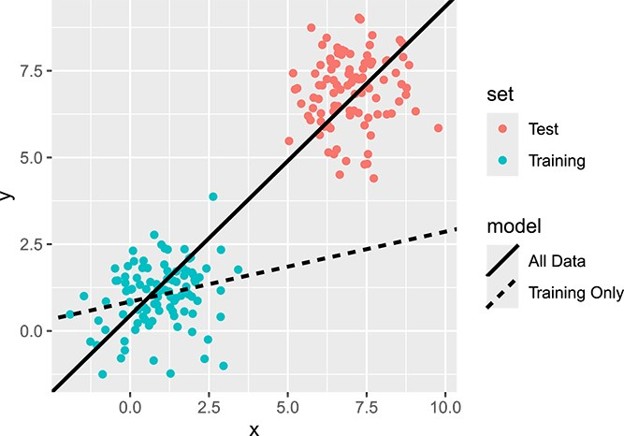
Description: Literature around climate change adaptation in forestry has repeatedly called for climate-sensitive growth and yield models. We suggest
that these ‘climate-sensitive’ models should have particular statistical characteristics in order to make effective, accurate predictions
of future forest conditions. Growth and yield models also need to match the scope and scale of adaptive silviculture or other climate
adaptive strategies to be useful as decision support tools for forest managers. Adaptive silviculture requires tools that can simulate
techniques such as assisted migration, mixing of species, and changes to forest structure in the context of novel climatic conditions. To
help assess the ability of growth and yield models to meet these new demands, we identify and establish specific model criteria derived
from the statistical and silvicultural requirements imposed by climate change. In accordance with these criteria, we propose a new
model classification scheme based on the principles of causal statistics, which has specific utility for assessing model efficacy. In this
classification scheme, models are grouped into those that apply mechanistic, causal, or statistical principles, a taxonomy that relates
specifically to model function, i.e. the ability of models to serve as predictive tools, rather than practical model structure. Using this
scheme, we examine a number of existing models in relationship to the proposed model criteria, emphasizing the challenges of meeting
the wide range of model requirements, and the diversity of approaches available in the current literature. We find that models applying
mechanistic or causal principles are most suited to making predictions under climate change, but that these models are challenged by
the requirements of adaptive silviculture. The wide scope of demands placed on growth and yield models, and the uncertainty around
predictions suggest that an effective approach may be to use multiple models that utilize different mechanistic or causal principles,
to both reduce the risk of bias and to increase f flexibility. In order to facilitate the use and comparison of multiple models, we suggest
that model interoperability should be a major priority for model development. New types of data and new techniques drawn from
causal statistics should also be investigated to improve model predictions under the uncertainty of climate change. The new model
classification scheme proposed here will allow both developers and users of growth and yield models to more precisely identify which
types of models are needed to meet the statistical and silvicultural challenges imposed by a changing environment.
Snapshot: 0
Category: Forest Modelling, Planning & Decision Support
FWPA RD&E: 8.5
¶ Details
| Company | Country | Type | Website | Available in Australia? | Year | Status | Remarks | TRL | Employees | Colour | Inventors | Patent Model. |
|---|---|---|---|---|---|---|---|---|---|---|---|---|
| Gilson et al. | University of British Columbia, Canada | Paper | Link | 2025 | Red |