¶ Hravester simulator
| Company | Rottne |
| Country | sweden |
| Website | https://rottne.com/en/catalog/products/rottne-simulator |
| Category | Harvesting & Extraction › Felling & processing |
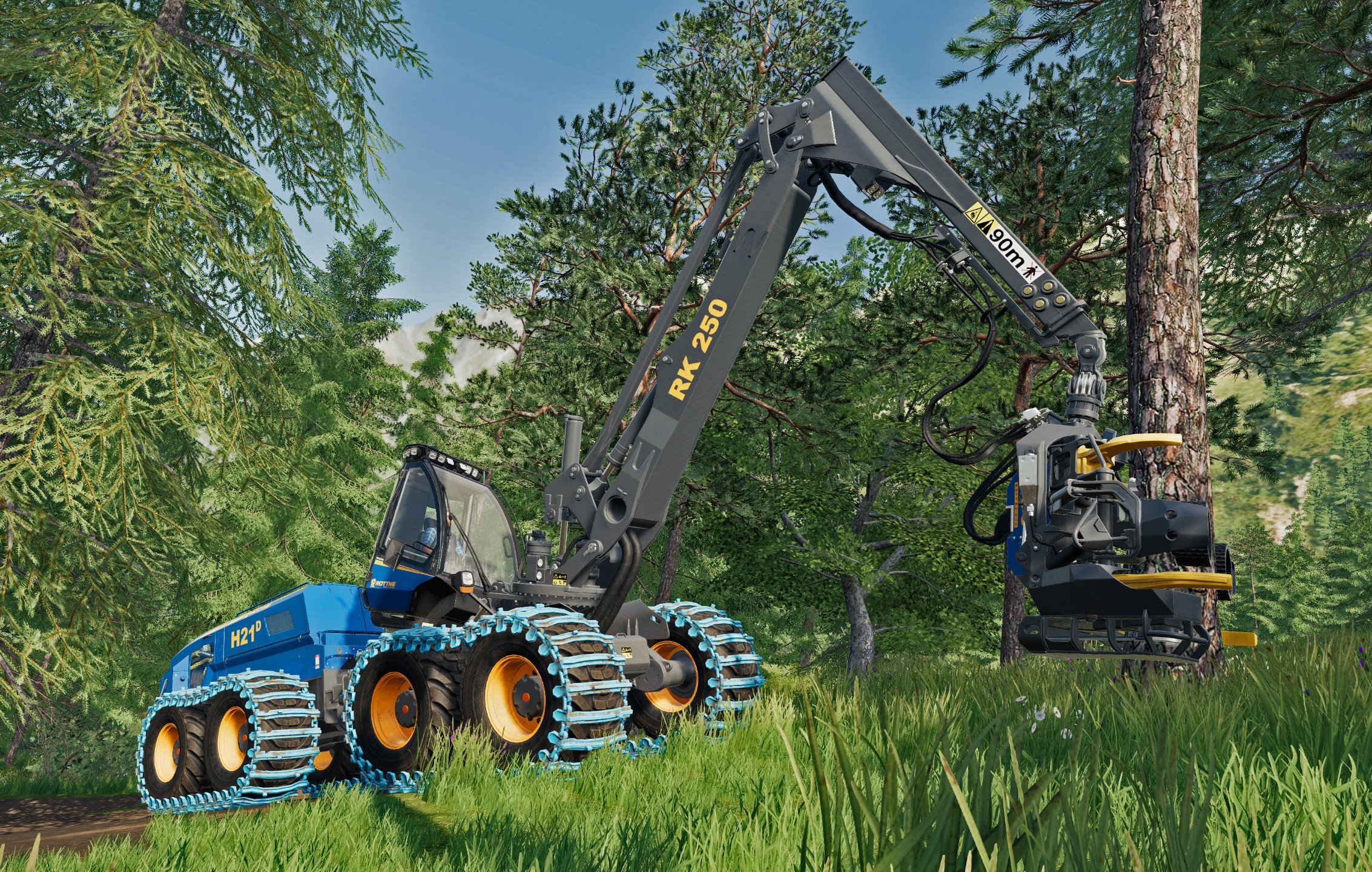
Commercial Swedish-manufactured forest machines including the H8, H21D harvesters and F-series forwarders for efficient cut-to-length operations.
¶ Overview
A harvester simulator is a training and assessment technology that replicates the operating environment of a forestry harvester using a physical cab mockup, multiple high-resolution screens, and sophisticated simulation software to provide realistic, risk-free operator training without the cost, fuel consumption, or potential for machine damage associated with in-forest training on real equipment. These simulators accurately model the behaviour of harvester booms, processing heads, feed rollers, saw bars, and terrain interaction, presenting trainees with a virtual forest environment in which they must fell, process, and optimise the bucking of virtual trees according to price matrices and quality specifications. The simulation software typically includes physics engines that replicate wood grain behaviour, stem deflection under boom forces, and the response of feed rollers to varying wood diameters — creating a realistic tactile-equivalent experience when combined with force-feedback joystick and lever controls. Major simulator manufacturers include Komatsu Forest (with its MaxiSim platform), Ponsse, and third-party developers such as Oryx Simulations and BEC Systems, with products used by forestry training organisations, contractors, and equipment dealers worldwide. In Australia, harvester simulators are used by registered training organisations (RTOs) delivering qualifications under the FSK (Forest and Forest Products) training package, providing a standardised environment for initial skills development before trainees transition to supervised real-machine operation. The economic case for simulation training is compelling: a skilled harvester operator can generate significant revenue through optimised bucking decisions, and simulator training has been shown to measurably reduce the time required to reach operational competency. Simulators also enable practice of emergency scenarios — such as machine rollover recovery procedures or hydraulic failure responses — that would be impossible or extremely dangerous to rehearse on live equipment. As the Australian forestry industry faces an ongoing skills shortage, investment in simulator-based training pathways is seen as a key strategy for expanding the operator workforce.
¶ Details
| Field | Value |
|---|---|
| Company | Rottne |
| Country | sweden |
| Type | Company |
| FWPA RD&E | 8.5 |