¶ Heavy Machinery
| Company | Link Belt Forestry (LBX Company) |
| Country | USA |
| Website | https://en.lbxco.com/forestry/ |
| Category | Harvesting & Extraction › Remote sensing & mapping |
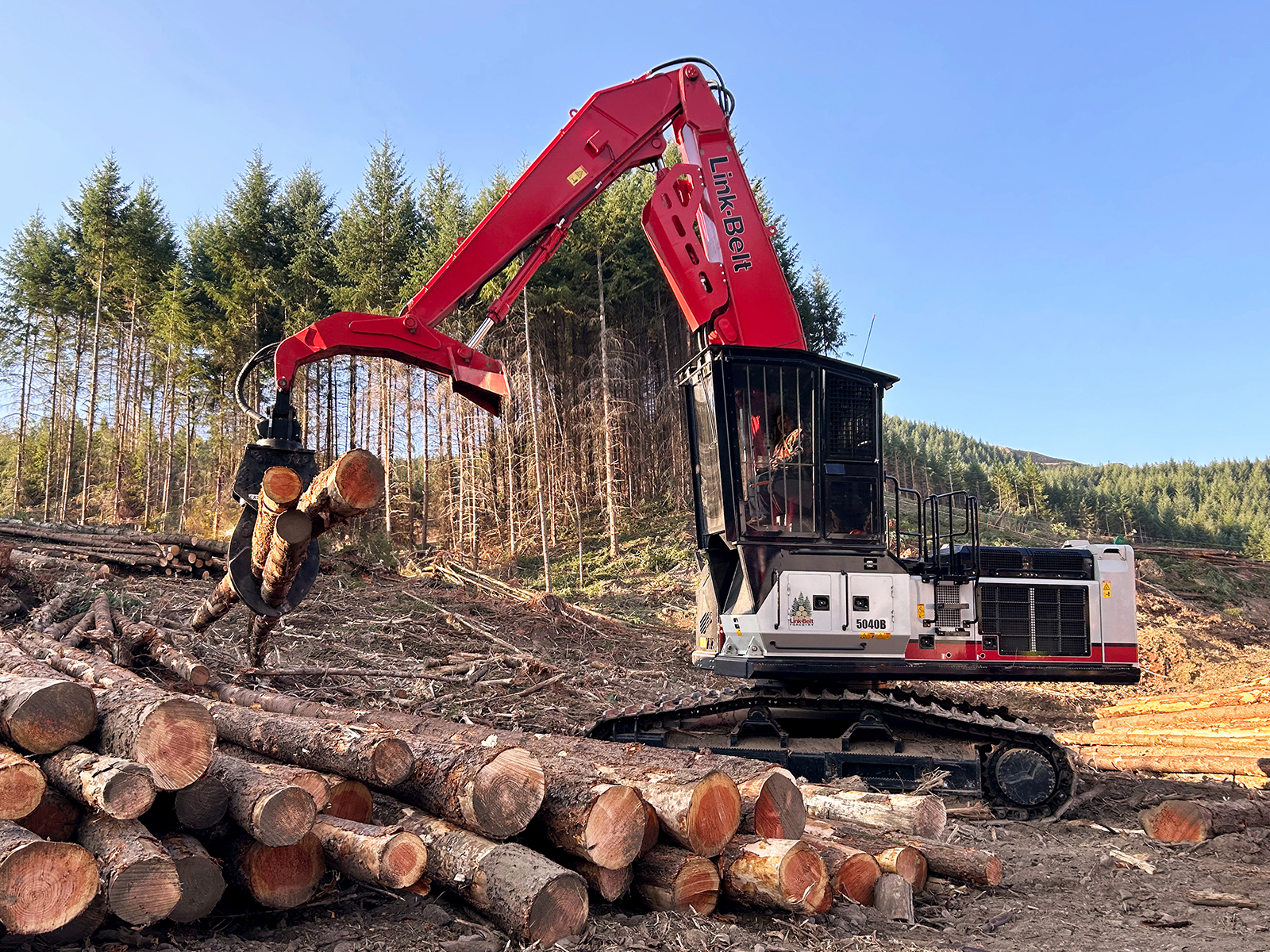
Various diggers to harvest and handle logs
¶ Overview
Heavy machinery in the forestry sector refers to the mechanical assets of significant size, weight, and power that are employed across the full spectrum of forest management activities, from initial land clearing and site preparation through to harvesting, log transport, and post-harvest rehabilitation. While the term overlaps substantially with "heavy equipment," it is often used in a broader operational and regulatory context that encompasses not just the machines themselves but their maintenance regimes, transport logistics, and the infrastructure required to support them in the field. In Australian forestry, heavy machinery fleets are a major capital investment for both harvesting contractors and government forestry agencies, with individual machines such as purpose-built timber harvesters or large log loaders representing investments of several hundred thousand to over one million Australian dollars. The operational management of heavy machinery fleets has been transformed by digital technologies including real-time telematics systems that transmit machine location, engine hours, fuel burn, fault codes, and productivity metrics to centralised dashboards accessible by fleet managers and maintenance teams. Predictive maintenance algorithms, increasingly powered by machine learning, analyse this data to anticipate component failures before they cause unplanned downtime — a critical capability in remote Australian operating environments where parts and technician access may involve significant delays. The transport of heavy machinery between forest coupes requires careful route planning to comply with oversize load regulations, particularly in states such as Tasmania and Victoria where winding mountain roads are common. Environmental regulations in Australia increasingly require that heavy machinery operating in sensitive areas such as riparian zones or on steep terrain meet specific soil disturbance standards, driving interest in low-ground-pressure machine configurations, bogie axle systems, and the use of brush mats or extraction aids to minimise compaction.
¶ Details
| Field | Value |
|---|---|
| Company | Link Belt Forestry (LBX Company) |
| Country | USA |
| Type | Company |
| FWPA RD&E | 4.0 |