¶ Wildfire mitigation
| Company | Overstory (20tree.ai) |
| Country | Netherlands |
| Website | overstory.com |
| Category | Protection & compliance › Wildfire |
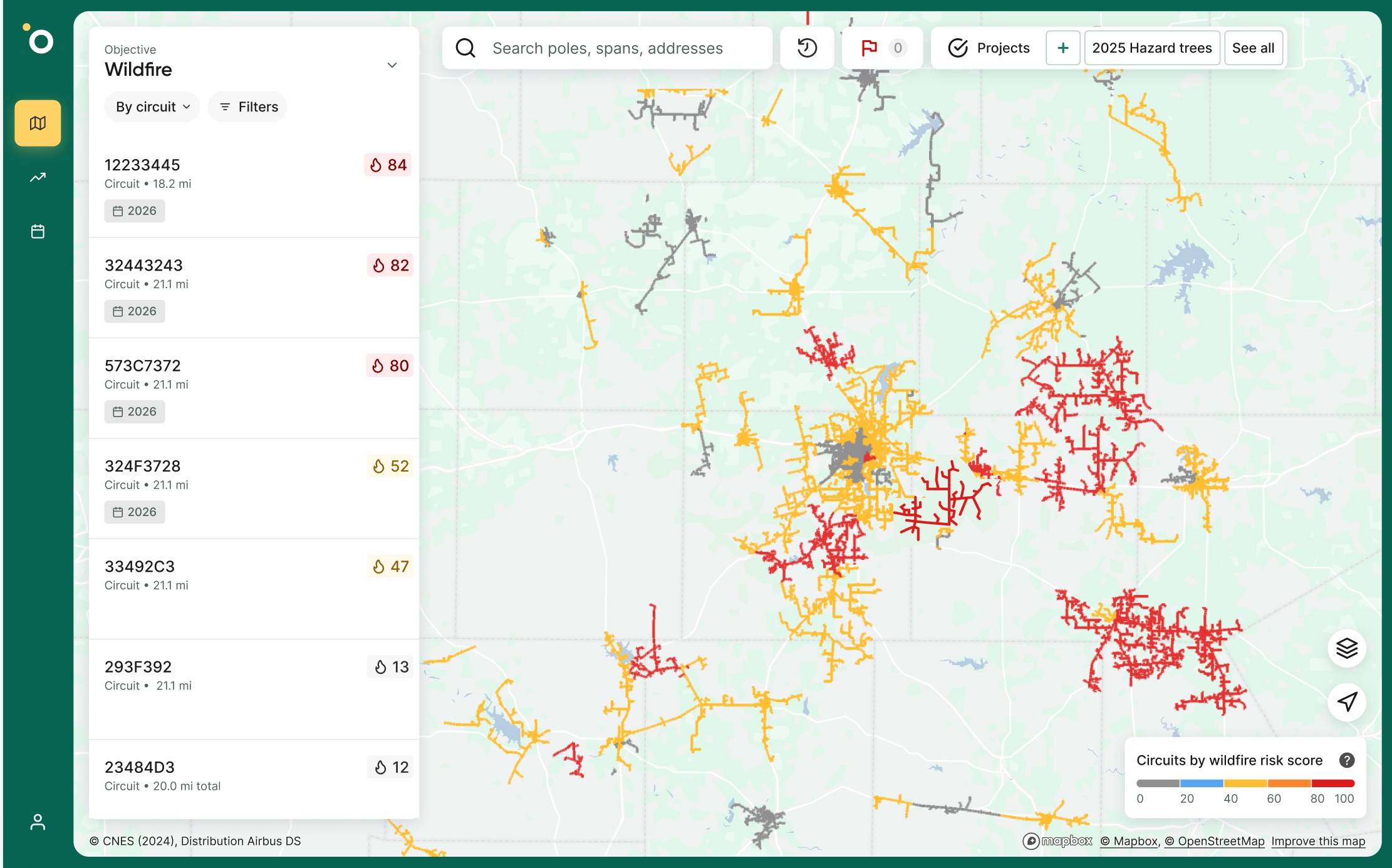
¶ Overview
Wildfire mitigation encompasses the full range of proactive strategies, technologies, and management practices applied to reduce the likelihood of ignition, limit the rate of spread, and decrease the intensity of wildfires in forest and bushland landscapes, with the ultimate aim of protecting human life, property, biodiversity, and the productive capacity of forest assets. The foundational approach is fuel management — the deliberate reduction of accumulated dead vegetation, understorey shrubs, and ladder fuels through prescribed burning, mechanical slashing, mastication, and grazing — which lowers fire intensity by reducing the energy available for combustion. In Australian forestry, prescribed burning has been practised for millennia by Aboriginal and Torres Strait Islander peoples as cultural burning, and contemporary land management agencies are increasingly integrating indigenous fire knowledge into landscape-scale programs. Modern technology has substantially expanded the precision and effectiveness of mitigation planning: satellite-derived fuel accumulation models combined with fire behaviour simulation software such as Phoenix RapidFire and Spark allow land managers to identify the areas where fuel reduction treatment will yield the greatest risk reduction per hectare treated. Strategic placement of firebreaks, water points, and helipads within plantation and state forest areas supports rapid access by suppression crews and aerial resources. Post-harvest slash management — including residue mulching, windrowing, and burning of logging debris — is a critical mitigation step within commercial forestry operations, reducing the extreme fuel loads that can develop after clearfell harvesting. At the landscape scale, Australian jurisdictions including Victoria's Department of Energy, Environment and Climate Action and the NSW Rural Fire Service coordinate integrated fire management planning that links forest operations scheduling with seasonal burn programs, remote sensing monitoring, and community-level preparedness, recognising that effective wildfire mitigation requires coordinated action across tenure boundaries and across the full prevention-preparedness-response-recovery cycle.
¶ Assessment
Provides targeted fire-risk reduction through vegetation analysis, offering solid protection benefits though productivity gains are indirect.
¶ Details
| Field | Value |
|---|---|
| Company | Overstory (20tree.ai) |
| Country | Netherlands |
| Type | Company |
| Employees | ~40 |
| FWPA RD&E | 2.1 |