¶ Using GNSS coordinates and an Autonomous UAV to inspect trees and mark those with beetle infestation
| Patent holder | Ceske Vysoke Uceni Tech v Praze, Ceska Zemedellska Univerzita v Praze |
| Patent link | View patent |
| Category | Protection & compliance › Remote sensing & mapping |
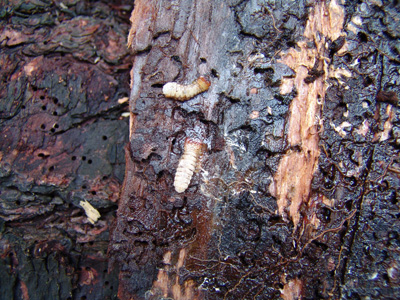
Method of marking bark Bettle infested trees and means for executing this method
¶ Overview
This application describes an autonomous UAV workflow in which pre-loaded GNSS waypoint coordinates — derived from prior field surveys, satellite imagery analysis, or forest inventory databases — are used to direct an unmanned aerial vehicle to inspect individual trees at known locations and identify those showing visual or spectral symptoms of bark beetle infestation, enabling large-scale systematic surveillance without continuous human piloting. The process begins with a database of tree positions (or grid sampling points) expressed as WGS84 coordinates, which are uploaded to the UAV's flight management system. The UAV autonomously navigates to each waypoint, typically hovering at a standardised distance and angle from the tree crown, and captures imagery using RGB, multispectral, or hyperspectral cameras. Onboard or post-processed machine-learning models — trained on labelled imagery showing healthy foliage, early "green attack" discolouration, "red attack" needle browning, and "grey attack" bark bleaching characteristic of beetle kill — classify each tree's health status in real time or in post-flight analysis. Trees classified as infested are automatically flagged in a GIS layer, and their GNSS coordinates are exported to field crews or used to trigger follow-up closer inspection by a second UAV pass or ground team. Bark beetle species of major forestry concern include the European spruce bark beetle (Ips typographus), Mountain pine beetle (Dendroctonus ponderosae) in North America, and in Australia, native bark beetles such as Ips grandicollis that affect exotic pine plantations and various Phoracantha borers in eucalypt stands. Research programmes in Germany, the Czech Republic, and Scandinavia have validated this approach across large spruce forests devastated by Ips typographus outbreaks exacerbated by drought and climate change. In Australian softwood plantation management, equivalent systems are being evaluated for Sirex woodwasp and pine bark beetle monitoring, where early detection significantly reduces the volume of timber lost to infestation.
¶ Details
| Field | Value |
|---|---|
| Company | Ceske Vysoke Uceni Tech v Praze, Ceska Zemedellska Univerzita v Praze |
| Type | Patent |
| Year | 16/6/23 |
| Status | Pending |
| FWPA RD&E | 5.1 |
| Inventors | Hert Daniel, Saska Martin, sRamek Martin, Matula Svatopluk, Zouhar Miloslav, Mihalikova Marketa, Vrba Matous, Ukleh Adam, Saskova Vera, Nedvidek David |
| Patent No. | WO 2024/255934 A1 |