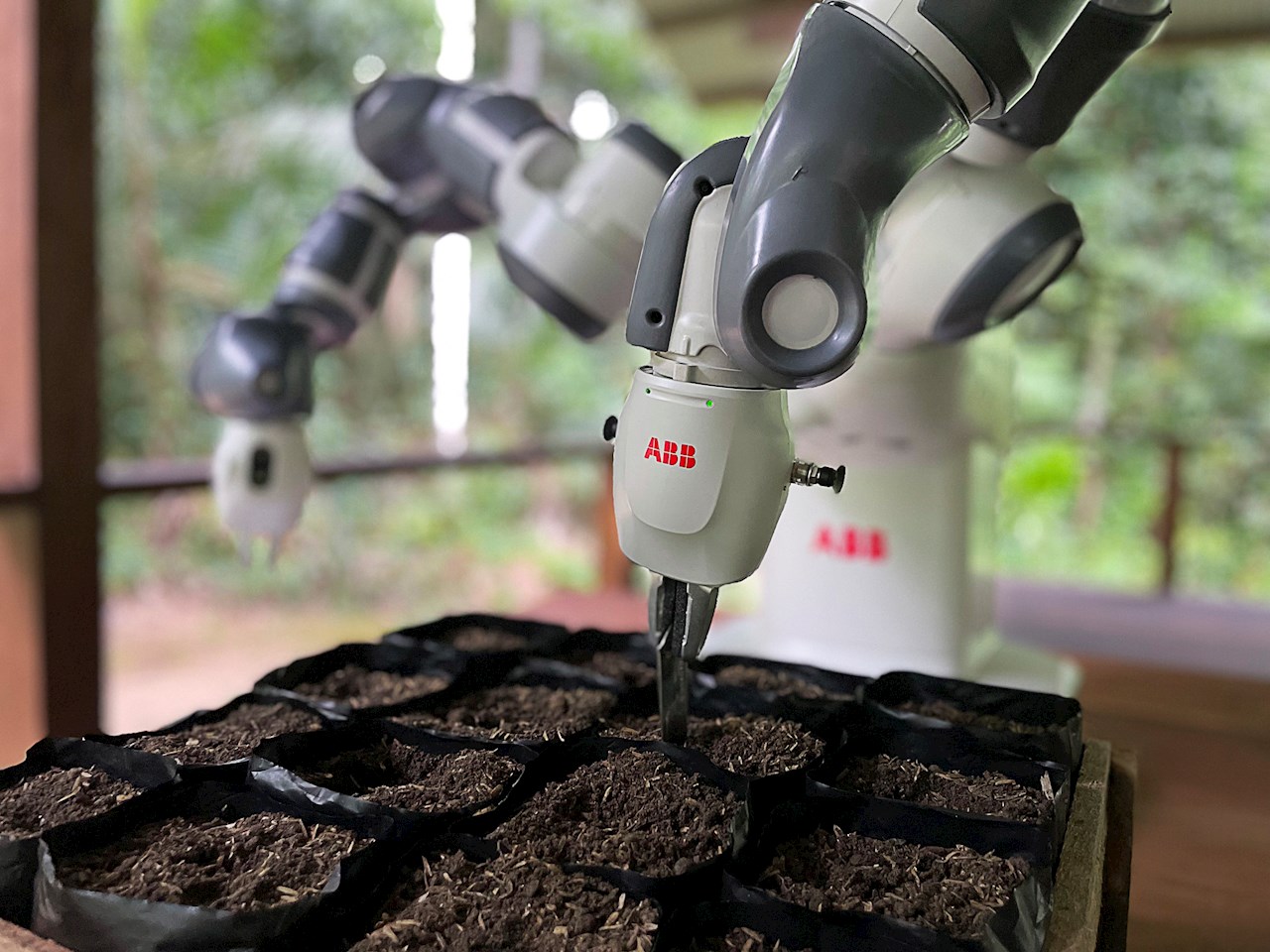
Research into dual-arm robotic systems for nursery tree planting in the Amazon context explores how anthropomorphic robotic arms — configured in bilateral pairs to mimic the two-handed dexterity of human nursery workers — can automate the repetitive and physically demanding tasks of seedling picking, substrate filling, transplanting, and potting that underpin large-scale tropical reforestation supply chains. In the Brazilian Amazon, nursery operations producing seedlings for reforestation programs such as those supported by the Amazon Fund and the national PLANAVEG (National Plan for Native Vegetation Recovery) generate tens of millions of seedlings annually, predominantly through manual labour that is costly, difficult to scale rapidly, and subject to worker shortages in remote regions. A dual-arm robot for this application typically consists of two 6-DOF robotic manipulators mounted on a central column or mobile base, equipped with compliant grippers designed to handle fragile seedlings without damaging stems or root balls. Vision systems — usually RGB-D cameras — guide arm movements to locate individual seedlings in trays, assess their developmental stage, and place them precisely into substrate-filled containers at the correct depth and orientation. Force-torque sensing at the wrists allows delicate control of grip force during seedling handling, a critical requirement given the variation in stem diameter, root morphology, and substrate cohesion across tropical species. Research published by Brazilian agricultural robotics groups and international collaborators has demonstrated proof-of-concept dual-arm transplanting systems achieving throughput rates approaching those of skilled human workers for uniform seedling stock, though performance degrades with high morphological variability typical of wild-collected or mixed-species batches. The technology is relevant beyond the Amazon to any large-scale tropical reforestation nursery context, including community and government nurseries in northern Australia supplying seedlings for savanna restoration and Indigenous land management programs.