¶ Timber supply chain management
| Company | TimberSmart |
| Country | New Zealand |
| Website | https://www.timbersmart.co.nz/ |
| Category | Logistics & mills interface › Chain-of-custody |
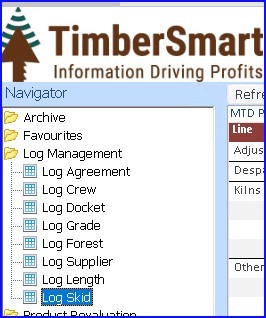
Information system for log inventory, production planning and stocktake
¶ Overview
Timber supply chain management encompasses the planning, coordination, and optimisation of all activities involved in moving wood from standing forest through harvesting, transport, primary and secondary processing, and ultimately to end-use markets, with the goal of maximising value, minimising cost and waste, and meeting customer specifications and regulatory requirements. The supply chain for timber is characterised by high variability in raw material quality and quantity, long lead times between planting and harvest, perishability risks (blue stain, insect attack, seasoning degrade), and significant logistical complexity arising from the geographic remoteness of forest resources relative to processing and market centres. Effective management requires integration across functions including harvest scheduling and coupe sequencing, machine and contractor fleet management, log transport optimisation (road trains, rail, ship), mill yard inventory management, sawmill production scheduling matched to log mix, and sales and distribution planning. Digital transformation is reshaping timber supply chain management through tools such as harvest management information systems (MIS), real-time GPS tracking of log trucks, weigh-in-motion (WIM) systems for accurate log payload measurement, and integrated enterprise resource planning (ERP) platforms that connect forest, transport, and mill data. Demand-driven supply chain approaches — where downstream processing requirements and market orders propagate back to influence harvesting scheduling and log assortment decisions — are increasingly adopted by larger integrated forest products companies. In Australia, timber supply chain management is complicated by long transport distances (particularly for export woodchip and plantation log flows in Queensland, Western Australia, and South Australia), variable road network quality, and the need to coordinate multiple harvesting contractors across dispersed plantation estate. The FWPA-funded LogTruck scheduling research and tools such as TimberLINK and Plycem have been developed to address specifically Australian supply chain optimisation challenges, improving truck utilisation, reducing road damage, and improving mill supply reliability.
¶ Assessment
A strong optimisation solution that improves traceability and reduces financial planning risks across supply chains.
¶ Details
| Field | Value |
|---|---|
| Company | TimberSmart |
| Country | New Zealand |
| Type | Company |
| Available in AU? | yes |
| FWPA RD&E | 4.5 |