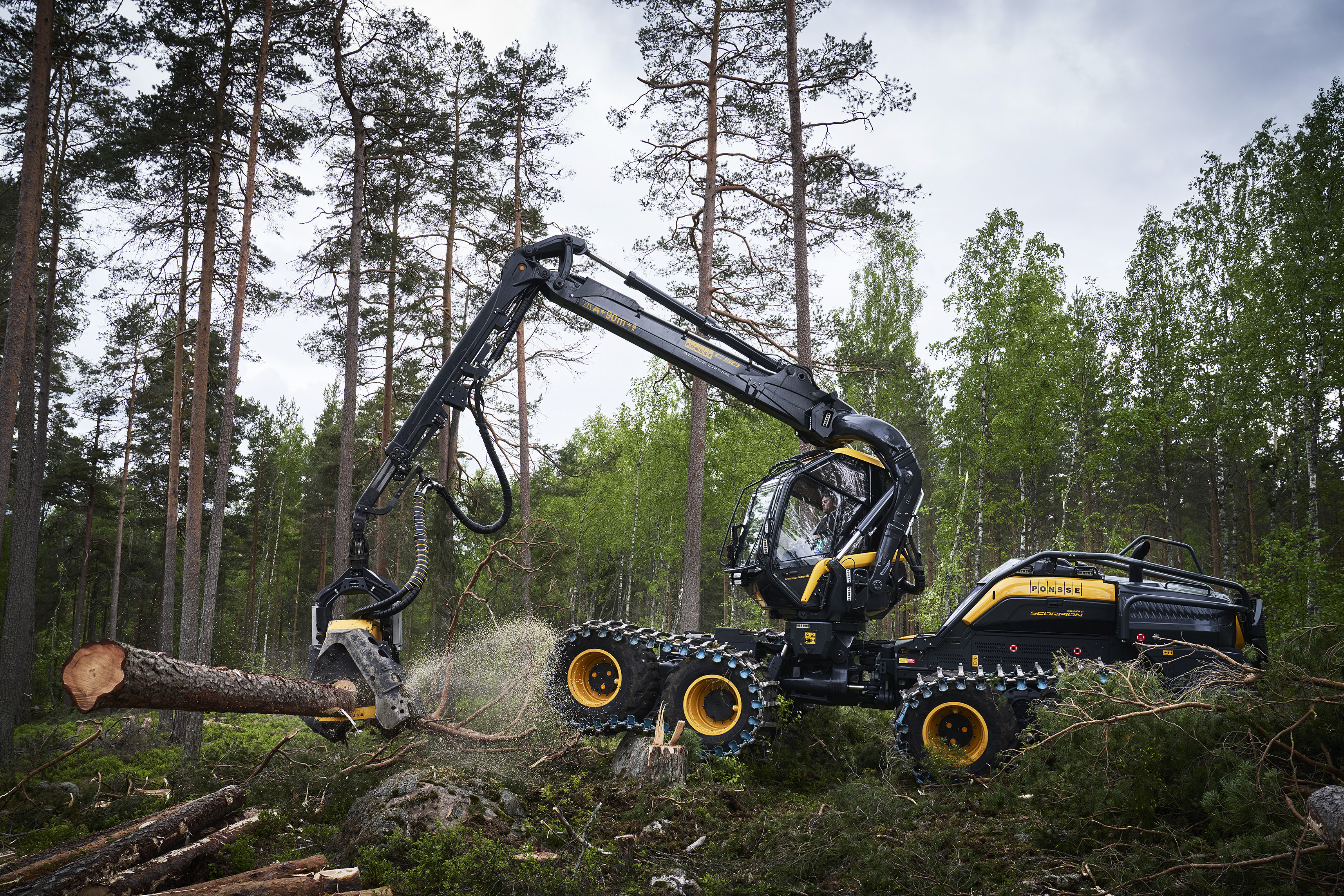
Sustainable harvesters are forest harvesting machines and operational systems designed to minimise ecological impact while maintaining economic productivity, aligning mechanised timber extraction with the principles of sustainable forest management (SFM). The concept encompasses both machine-level engineering choices — such as low ground-pressure undercarriage systems, bio-based hydraulic fluids, reduced-emission or electric powertrains, and precision cutting heads that maximise stem utilisation — and system-level operational practices such as pre-planned extraction corridors, slash management for soil protection, and selective harvesting prescriptions that retain ecologically important trees. Modern sustainable harvester designs increasingly incorporate telematics and onboard decision-support tools that guide operators to avoid watercourses, steep slopes, and sensitive habitats identified in digital forest management layers, reducing the risk of unintentional environmental breaches. Hybrid and fully electric harvester prototypes, developed by manufacturers including Komatsu Forest and Ponsse, aim to reduce fossil fuel consumption and noise pollution, which is particularly relevant to operations adjacent to conservation reserves or community-sensitive areas. In Australian forestry, sustainable harvester principles are applied within the framework of Forest Practices Codes and Regional Forest Agreements (RFAs) that specify operational standards for native forest harvesting in states such as Tasmania, Victoria, and New South Wales. Plantation operations certified under FSC or the Australian Forestry Standard (AS 4708) also require demonstration of environmentally responsible harvesting practices. The commercial case for sustainable harvesters is strengthening as carbon markets, green building product specifications, and ESG reporting frameworks create financial premiums for timber produced with demonstrably lower environmental footprint. Research partnerships between the Forest and Wood Products Australia (FWPA) organisation and equipment manufacturers continue to trial innovations in harvester technology suited to Australian terrain and species conditions, including steep-slope cable-assist systems for harvesting in high-rainfall mountainous terrain.
| Field |
Value |
| Company |
Ponsse |
| Country |
Finland |
| Type |
Company |
| Employees |
~1,800 |
| FWPA RD&E |
4.1 |