¶ SkyPlanter
| Authors | Lloyd et al |
| Paper (PDF) | View paper |
| Category | Nursery & Establishment › Remote sensing & mapping |
0
¶ Overview
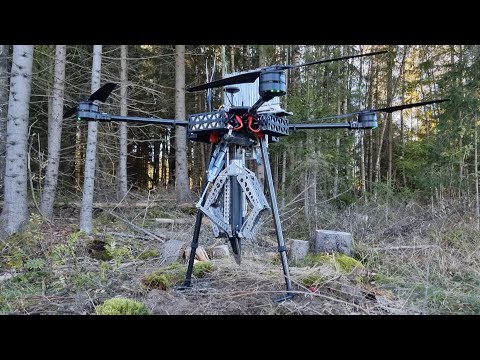
SkyPlanter is a drone-based aerial reforestation system designed to rapidly deploy tree seeds or seedlings across large, difficult-to-access landscapes without the need for ground-based crews or machinery. The system typically involves an unmanned aerial vehicle (UAV) equipped with a pressurised or mechanically actuated seed pod delivery mechanism, capable of firing biodegradable seed pods into the soil at high velocity to achieve adequate penetration for germination. More advanced variants use pre-germinated seedlings in nutrient-rich pods to improve establishment rates compared to raw seed dispersal. The appeal of aerial planting lies primarily in its ability to reach steep gullies, post-fire regeneration zones, riparian areas, and other terrain where ground machinery cannot safely or economically operate. In the Australian context, SkyPlanter-style systems have attracted interest following the catastrophic 2019–2020 Black Summer bushfires, which burned approximately 18.6 million hectares and devastated both native forests and plantation areas across New South Wales, Victoria, and South Australia. Reforestation at that scale presented a logistical challenge far beyond traditional planting capacity, driving investment in drone-assisted solutions. Companies including AirSeed Technologies, an Australian startup, have developed drone-seeding platforms with AI-guided targeting systems that identify optimal planting microsites from aerial surveys. The SkyPlanter concept specifically emphasises scalable deployment, with fleets of drones operating concurrently to achieve planting rates orders of magnitude faster than manual methods. Key technical challenges include ensuring adequate soil penetration of pods, optimising species selection and pod design for local conditions, and achieving acceptable establishment rates that can meet regulatory and certification requirements for carbon projects or plantation establishment. Ongoing research in Australia and globally continues to refine seed coating technologies, flight path optimisation algorithms, and post-planting monitoring using satellite and drone imagery to assess survival outcomes.
¶ Details
| Field | Value |
|---|---|
| Company | Lloyd et al |
| Type | Paper |
| Year | 2025 |
| FWPA RD&E | 4.4 |