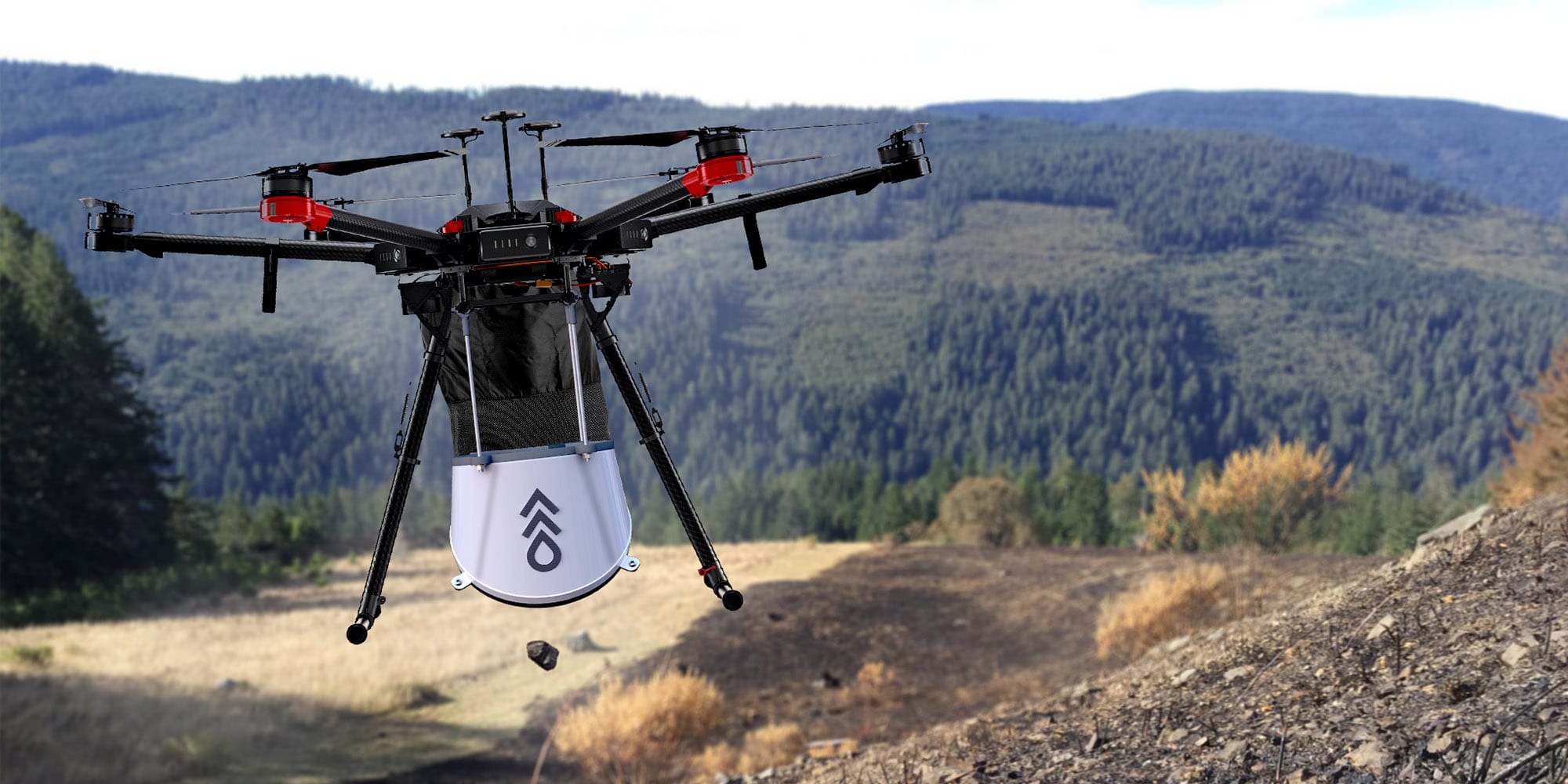
UAV seeding using purpose-designed seed pods is an emerging reforestation and restoration technique in which drones carry and release encapsulated seeds over target areas at scale, replacing or supplementing broadcast aerial seeding by helicopter or fixed-wing aircraft and the slow, expensive process of manual planting. Seed pods are typically small biodegradable capsules — constructed from materials such as compressed peat, coconut coir, paper pulp, or bioplastics — that enclose pre-treated seeds along with moisture-retaining gels, nutrients, and sometimes germination-stimulating compounds. The pod's physical structure protects the seed from impact on hard or stony ground, retains soil moisture during the critical early germination phase, and prevents seed predation by birds and small mammals. UAV delivery systems range from modified off-the-shelf agricultural drones fitted with custom hoppers or individual-pod dispensers to purpose-built multi-rotor platforms with electronically controlled seed ejectors that deposit pods at precisely georeferenced locations according to a pre-programmed flight plan. Flight missions are typically planned using desktop or tablet GIS software that incorporates terrain data, target species habitat suitability maps, and desired planting density, with the drone autonomously following the planned route. Data from each mission — including pod drop locations recorded by onboard GPS — creates an as-planted map that supports subsequent survival monitoring. UAV seeding offers particular advantages in post-fire landscapes, eroded hillsides, and wetland margins where ground access is hazardous. Australian companies such as AirSeed Technologies have demonstrated this approach across thousands of hectares of post-bushfire land in eastern Australia, and the technique is also being applied to restoration of Banksia woodland and coastal scrub ecosystems.
| Field |
Value |
| Company |
Flash Forest |
| Country |
Canada |
| Type |
Company |
| Employees |
~20 |
| FWPA RD&E |
4.4 |