¶ poor quality article about robots in forestry
| Authors | Chudy |
| Country | Forest Monitor |
| Paper (PDF) | View paper |
| Category | Harvesting & Extraction › Felling & processing |
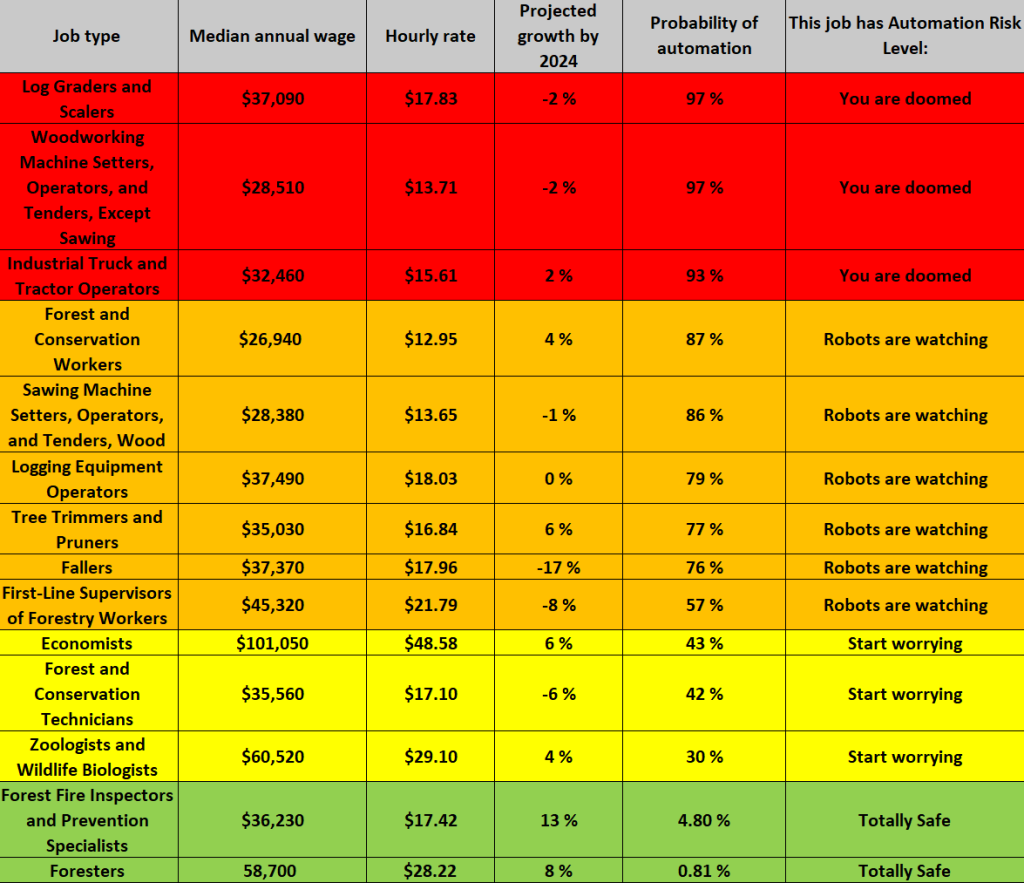
potential of replacing workers with robots
0
¶ Overview
This entry refers to the category of low-quality or superficial literature on the application of robotics in forestry — a body of work that, despite its limitations, reflects the growing public and industry interest in automating forest operations. Robotics in forestry is a genuine and rapidly advancing field, encompassing autonomous harvesters, tree-planting robots, drone-based monitoring systems, and unmanned ground vehicles for forest inventory. However, the topic has also attracted a significant volume of poorly sourced, shallow, or technically inaccurate articles — particularly in trade publications, general-interest technology media, and early-stage academic surveys — that conflate demonstration prototypes with commercial readiness, misrepresent the capabilities of existing systems, or fail to engage with the substantial engineering challenges of operating autonomous machinery in unstructured, dynamic forest environments. Common shortcomings in such articles include the uncritical repetition of press release claims, a lack of engagement with peer-reviewed literature, failure to distinguish between remote-controlled and genuinely autonomous systems, and the omission of discussion around safety standards, regulatory frameworks, and economic viability. In the Australian context, where the forestry sector faces real pressures around labour availability, safety in difficult terrain, and the need for productivity improvement, the quality of information available to industry decision-makers matters considerably. Researchers and industry bodies such as the Forest Industry Safety and Training Alliance (FISTA) and the CSIRO have produced more rigorous technical assessments of robotics readiness, but these are often less visible than sensationalised media coverage. Critically evaluating sources and distinguishing between conceptual, prototype, and commercially deployed robotic systems remains an important skill for forestry professionals engaging with this literature.
¶ Details
| Field | Value |
|---|---|
| Company | Chudy |
| Country | Forest Monitor |
| Type | Paper |
| Year | 2018 |
| FWPA RD&E | 4.0 |