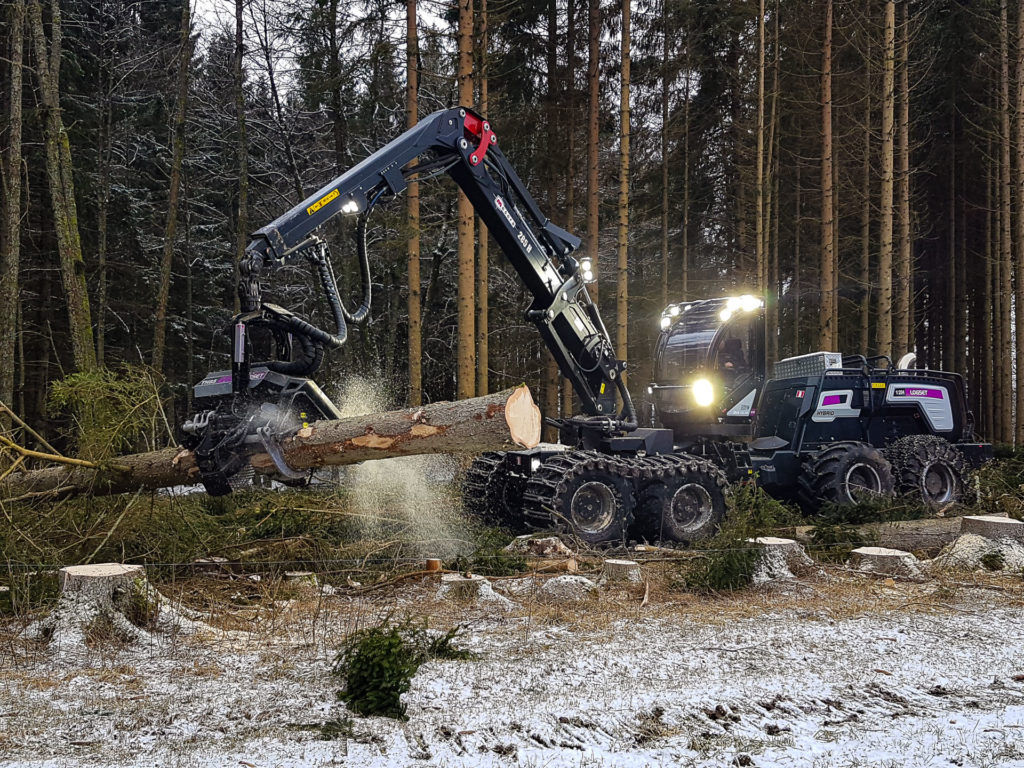
Hybrid harvesters are forestry harvesting machines that combine a conventional diesel internal combustion engine with one or more electric drive systems — typically electric motors powered by onboard battery packs or supercapacitors — to reduce fuel consumption, lower emissions, and improve energy efficiency compared to purely diesel-powered equivalents. The hybrid drivetrain concept, well established in passenger vehicles and mining equipment, has been progressively adapted for the demanding duty cycles of forestry harvesters, where the combination of high-torque boom movements, intermittent peak power demands during felling and processing, and extended periods of lower-load travel creates opportunities to recapture and reuse energy through regenerative braking and boom lowering. Manufacturers including Ponsse, Komatsu Forest, and John Deere have each explored hybrid or electrified harvester concepts, with Ponsse's Ponsse Buffalo Dual hybrid demonstrating meaningful fuel savings in commercial trials in Scandinavia. The forestry sector faces increasing pressure to reduce its carbon footprint under national and corporate sustainability commitments, and hybrid harvesters represent a near-term pathway to emissions reduction that does not require the infrastructure investment associated with fully electric machines — particularly relevant in remote Australian plantation and native forest environments where grid charging is unavailable. Battery technology advances, particularly in energy-dense lithium iron phosphate (LiFePO4) and solid-state chemistries, are steadily improving the economic viability of hybrid forestry machines by increasing energy storage capacity without proportional weight penalties that would compromise terrain mobility. In the Australian context, the high cost of diesel fuel in remote operating areas and the increasing carbon reporting obligations faced by forest product companies are additional incentives for uptake of hybrid harvesting technology. Research and pilot programs supported by industry bodies such as Forest and Wood Products Australia (FWPA) are monitoring the technology's maturation and assessing pathways for Australian deployment.
| Field |
Value |
| Company |
Logset Oy |
| Country |
Finland |
| Type |
Company |
| Employees |
~100 |
| FWPA RD&E |
4.0 |