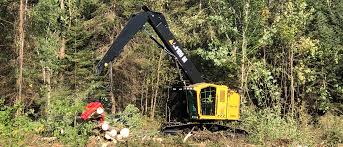
Heavy equipment in the forestry and logging industry encompasses the broad category of large, powerful machines used to carry out primary production tasks including tree felling, log extraction, road construction, and site preparation. This category includes not only purpose-built forestry machines such as harvesters, forwarders, feller-bunchers, skidders, and log loaders, but also adapted construction equipment such as bulldozers, excavators, graders, and articulated dump trucks that are used in roading and land preparation activities. The distinction between forestry-specific heavy equipment and general construction heavy equipment has blurred considerably as manufacturers have developed forestry configurations for standard earthmoving platforms, fitting them with protective guarding, reinforced booms, and specialised attachments. In Australian forestry contexts, heavy equipment plays a critical role in establishing and maintaining the haul road networks that enable machine access to remote plantation and native forest coupes. Companies such as Caterpillar, Komatsu, Liebherr, and Hitachi supply much of the base machine population used in Australian forestry roading, while Tigercat, John Deere, and Ponsse dominate the dedicated forestry harvesting equipment market. Heavy equipment operation in Australia is subject to strict occupational health and safety regulations, with operators typically required to hold relevant certificates of competency, and equipment required to meet rollover protective structure (ROPS) and falling object protective structure (FOPS) standards. The increasing integration of telematics, GPS-guided blade control, and remote health monitoring systems into heavy equipment is improving both productivity and safety outcomes in Australian forestry operations. Equipment longevity and total cost of ownership are major considerations, given the remote locations and high operating hours typical of Australian timber harvesting.