¶ forest growth model
| Authors | Song et al. |
| Country | Hangzhou Normal University, China |
| Paper (PDF) | View paper |
| Category | Planning & Inventory › Remote sensing & mapping |
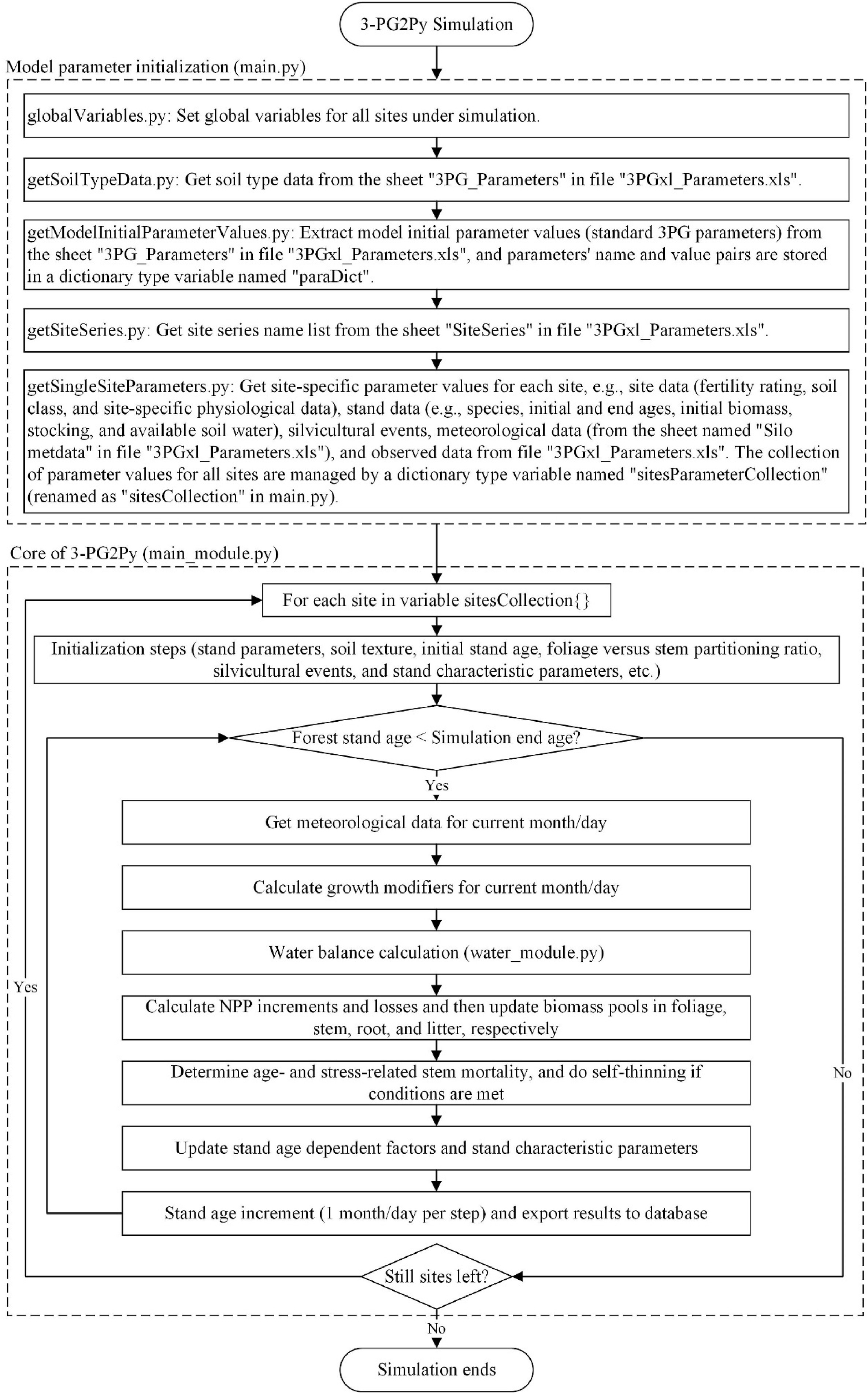
predicts, stem biomass, forest soil water andstand-based mean DBH
0
¶ Overview
A forest growth model is a mathematical or computational framework that describes and predicts how individual trees or forest stands change in size, structure, and composition over time in response to biological processes, site conditions, silvicultural treatments, and environmental drivers. These models serve as foundational tools in forest management, enabling practitioners and researchers to forecast timber yield, evaluate the effects of thinning or fertilisation, assess carbon sequestration potential, and project long-term stand development under varying management regimes or climate scenarios. Forest growth models are typically classified into three broad categories: whole-stand models, which predict aggregate stand-level attributes such as basal area, volume, and mean dominant height; size-class or diameter-distribution models, which track the distribution of trees across size classes; and individual-tree models, which simulate the growth of each tree in a stand based on competition indices, site quality, and species-specific parameters. Process-based models add mechanistic layers by simulating physiological processes such as photosynthesis, respiration, water uptake, and nutrient cycling, enabling more robust predictions under novel conditions including climate change. In Australian plantation forestry, species-specific growth models have been developed for radiata pine (Pinus radiata), blue gum (Eucalyptus globulus), shining gum (Eucalyptus nitens), and other commercially important species, calibrated against long-term permanent sample plot networks maintained by state forestry agencies and research institutions. Tools such as the 3PG (Physiological Principles Predicting Growth) model, developed in part at the University of Melbourne, have been widely applied in Australian and global plantation contexts. Accurate growth modelling underpins harvest scheduling, wood supply contracts, carbon project accounting under the Australian Carbon Credit Unit (ACCU) scheme, and investment planning across the forest industry.
¶ Details
| Field | Value |
|---|---|
| Company | Song et al. |
| Country | Hangzhou Normal University, China |
| Type | Paper |
| Year | 2022 |
| FWPA RD&E | 8.5 |