¶ Caterpillar “Battery‑as‑a‑Service” battery swapping system
Recommended Technology
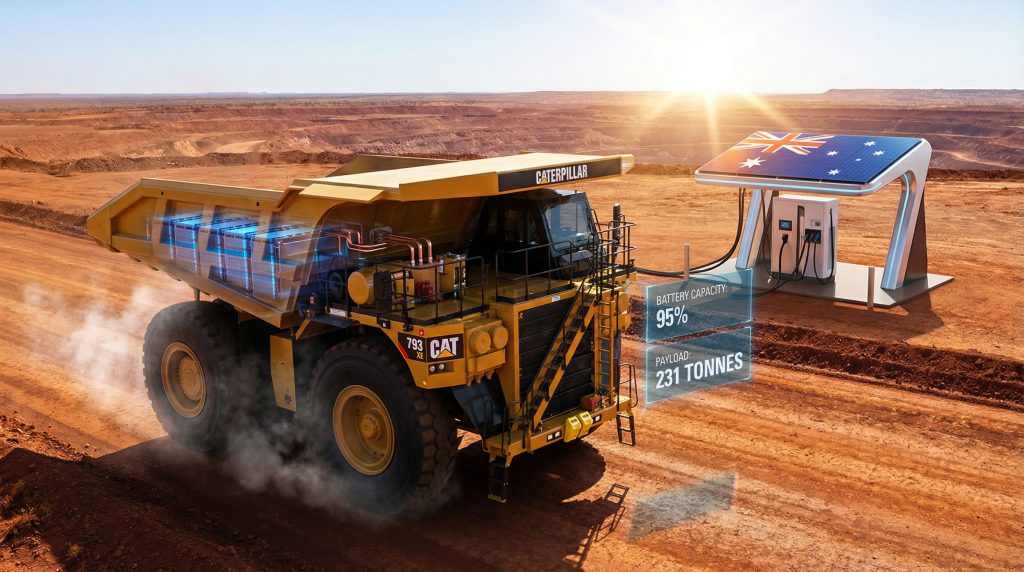
Description: Caterpillar does not currently offer a formal, stand‑alone “Battery‑as‑a‑Service” (BaaS) model in Australia comparable to Chinese heavy‑truck battery‑swapping platforms such as QIJI Energy. Instead, Caterpillar’s approach to batteries is embedded within a broader equipment‑as‑a‑system and lifecycle services framework, delivered through its dealer network (notably WesTrac, Hastings Deering, and Energy Power Systems Australia). In the Australian market, batteries for electric and hybrid equipment are typically supplied as part of the machine, with usage risk, maintenance, and performance guarantees managed through Cat Customer Value Agreements (CVAs), finance packages, and long‑term service contracts, rather than through separate battery ownership or leasing entities. This model prioritises equipment uptime, integrated maintenance, and predictable cost of ownership over modular, swappable energy logistics.
In practice, Caterpillar’s battery strategy in Australia is most visible in battery‑electric mining and underground equipment trials, particularly the Cat 793 XE battery‑electric haul truck and underground battery‑electric loaders and trucks being tested with operators such as BHP, Rio Tinto, and Newmont. These deployments rely on high‑power charging, automated energy transfer systems, and site‑level power integration, rather than mechanical battery swapping or off‑vehicle battery pooling. Batteries remain tightly integrated with vehicle design, reflecting Caterpillar’s emphasis on safety certification, structural integration, and performance validation in extreme operating environments. While Caterpillar does offer grid‑connected and mobile Battery Energy Storage Systems (BESS) in Australia for power smoothing, microgrids, and renewable integration, these systems support site energy management, not mobile battery exchange or BaaS for haulage fleets. Strategically, this positions Caterpillar’s model as infrastructure‑integrated electrification, rather than energy‑network abstraction. For sectors such as Australian forestry or mining, this means Caterpillar’s pathway favours site‑based charging ecosystems, OEM‑controlled lifecycles, and bundled service economics, rather than third‑party battery leasing or cross‑fleet standardisation.
¶ Details
| Company | Country | Type | Website | Available in Australia? | Year | Status | Remarks | TRL | Employees | Colour | Inventors | Patent Model. |
|---|---|---|---|---|---|---|---|---|---|---|---|---|
| Caterpillar | United States | Link |